
- House Democrats want stronger investigative powers over military-related prediction market trading.
- Lawmakers pointed to suspicious bets placed before Iran strikes and a later ceasefire announcement.
- Senate Democrats have also urged regulators to block contracts linked to war, death, and similar events.
House Democrats are seeking subpoena authority to investigate whether insider trading took place on prediction markets connected to U.S. military operations.
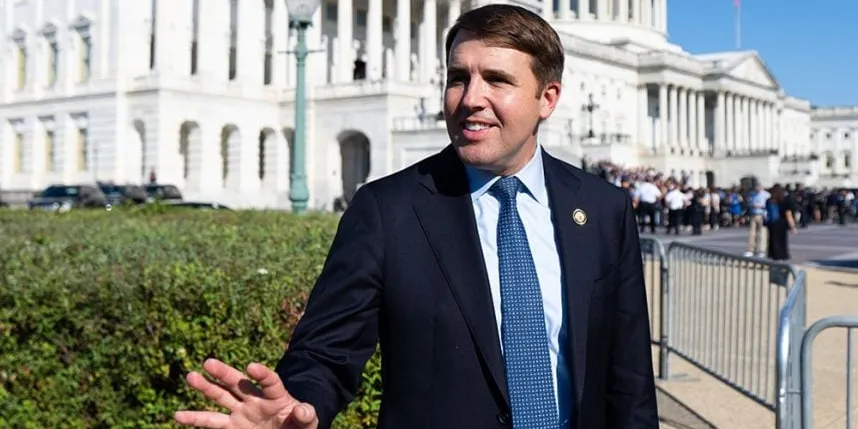
The effort is being led by Representative Chris Pappas of New Hampshire, together with six other Democratic lawmakers. In a letter sent to House Oversight Committee Chair James Comer, they argued that Congress needs broader tools to closely examine these markets.
If granted, subpoena power would allow congressional investigators to demand records from prediction market operators, brokers, banks, and potentially government officials. The goal would be to determine whether anyone used confidential military information to make profitable trades before major geopolitical events became public.
Criminal Case Intensifies Concerns
The request follows a recent criminal case involving U.S. special forces soldier Gannon Van Dyke, who pleaded not guilty to charges including misuse of confidential government information, theft of nonpublic information, and commodities fraud.
According to prosecutors, Van Dyke used knowledge of classified operations to earn more than $400,000 by betting on the timing of U.S. action in Venezuela and on events tied to President Nicolás Maduro.
Lawmakers also referenced a CNN investigation from March that described unusually successful trading tied to covert U.S. and Israeli military action against Iran. One Polymarket user reportedly made nearly $1 million with an estimated 93% win rate by placing bets shortly before operations in October 2024, June 2025, and February 2026.
In a separate example, 38 accounts funded during the week before the February 28 strikes reportedly generated more than $2 million in gains from related wagers.
Another cluster of at least 50 newly created accounts was said to have placed coordinated bets on a U.S.-Iran ceasefire on April 7, with some accounts appearing only minutes before the news became public.
Growing Pressure on Regulators
The controversy has added to broader political pressure on prediction markets. Earlier this year, Senate Democrats urged the Commodity Futures Trading Commission to take a stricter approach to contracts tied to war, terrorism, assassination, and other outcomes involving death.
In their appeal to CFTC Chair Michael Selig, the senators said the agency should make clear that any contract resolving on, or closely tied to, a person’s death must be categorically banned.
The lawmakers argued that the damage is no longer theoretical. In their view, some prediction platforms now resemble sportsbooks while also offering contracts linked to armed conflict and other extreme real-world events.
They further said these products sidestep state and tribal consumer safeguards, produce no public tax benefit, and weaken existing regulatory authority.